
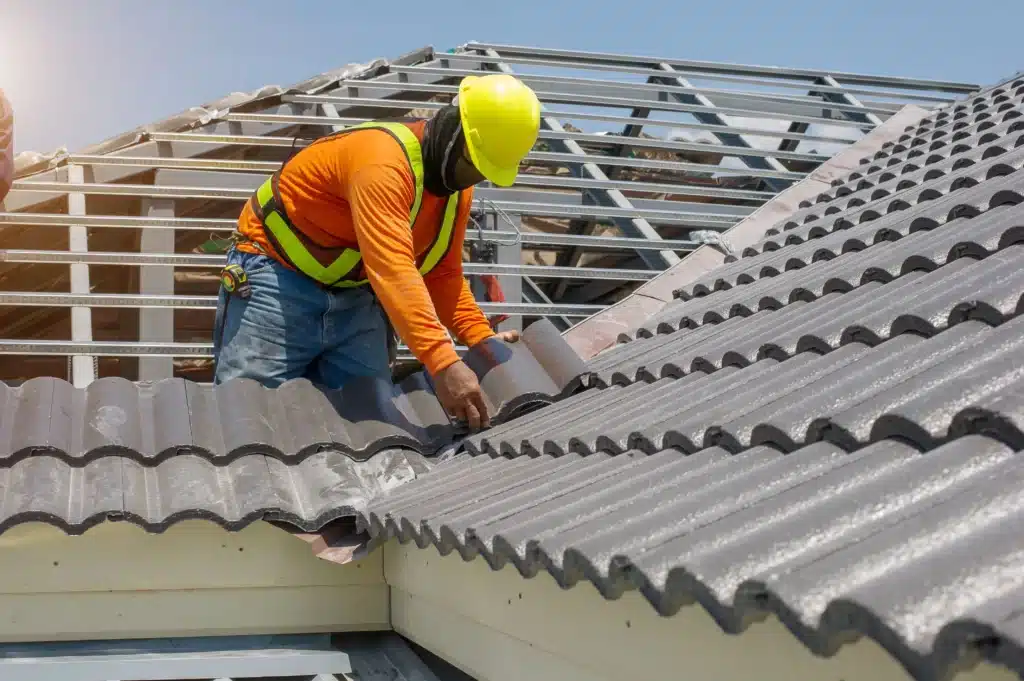
Usually, roof replacement on the residential level takes only 1 or 2 days of actual work but when taking into consideration all that goes into a roof replacement from the very first visit of the contractor to the last, then usually it takes between 1 to 3 weeks. And the most efficient way to not be surprised is to know everything about the process.
How Long Will a Local Roof Replacement Take?
The physical tear off and installation process for an average-sized single family residence typically lasts about one to two days depending on weather conditions. This is the number that the homeowner is interested in, but there is more to the story. It takes about one to three weeks to complete the free estimate, inspection, product selection, order and scheduling phase. If the roof is large or steep, it has multiple layers of old shingles that need to be removed, and/or the decking requires replacement, then the installation process will take one additional day. Weather is the other factor because Iowa’s central winters and springtime storms will often push out an installation date for one or two days, which is typical.
Step 1: What Takes Place During the First Appointment and Roof Inspection?
This process is initiated by having a free consultation and inspection of your home, whereby a person will come to your house and check out the actual state of your roof and not necessarily its age. In this case, there will be a check on how worn-out the shingles have become and if they have lost any granules, whether there are any current or previous leaks, how well the flashing around chimneys, vents, and valleys is done, and how structurally sound the decking is under it. If this has been because of the storm damage, then it should be taken into consideration since you are processing an insurance claim along with replacing your roof.
Step 2: How do you choose your materials and finalize your custom plan?
After the inspection, the next step in the process is talking about what you will be putting onto the roof. The choice is basically whether to have metal roofing or asphalt shingles for a Central Iowa roof, based on the budget, longevity of ownership of the home, and how well the roof can withstand strong winds and hailstorms. For asphalt shingles, at this point the warranty options for GAF products get discussed, namely that the Timberline line of shingles has a lifetime warranty program from GAF, which means that for the first few years the warranty includes full coverage of materials and labor, after which the shingle-only coverage is prorated up to 50 years. It’s also important to note that this is a warranty against manufacturing defects only, not against storm damage or natural wear and tear – a fact some homeowners find surprising later.
Step 3: What Should Homeowners Do to Prepare Their Home for Installation Day?
Some preparations made the day before installation can make the entire process go a lot more smoothly. Furniture and barbecue grills need to be removed from near the home because the vibrations created during the tear-off phase may cause objects stored in the shelving area or attic to fall out of place; it is advisable to remove all valuable objects from attic storage. Cars also need to be removed from the driveway so that there is room for the materials and a dumpster or a trailer. Pets will be better off indoors or, if they get stressed easily around noise, they should be taken to friends’ homes for the day.
Step 4: What Is the Process of Tear-Off, Deck Inspection, and Shingle Installation?
This is the stage of active roof construction, which involves a specific order of steps. First, old shingles and underlayment are stripped away to reveal the decking of the roof. The deck is then inspected for any rotting or soft spots — problems which can only be detected after the roof is stripped — and is repaired before anything else happens. At this point, new underlayment is put in place, new flashing is done for penetrations such as chimneys or vents, and ventilation through the soffits is verified; new shingles are laid down according to the manufacturer’s guidelines. Ventilation is especially important in Iowa compared to warmer states due to ice damming in freezing weather.
Step 5: What Is the Clean-Up and Walk-Thru Like?
Roof replacement isn’t considered finished when the final shingle is put in place. The job includes a complete site clean-up, involving a magnetic sweep of the yard and driveway to collect any stray nails before someone ends up with one in their tire or barefoot. Once the clean-up is done, the walk-thru will involve a project manager and review the work that has been done to make sure it was done correctly and meets your needs and that there are no more questions after the inspection. This process is one thing that helps make a good roof replacement job here different from a rushed one – it is included in the five step process used by Clear Choice Exteriors & Bath Makeover to take a project from your initial free consultation all the way to follow-up on the service.
In the case that the cost of complete replacement is an issue, it may be advisable to look into financing possibilities rather than immediately dismissing the idea of total roof replacement because that will definitely take care of any issues at hand. If you have not quite decided if you need to completely replace your roof or repair it, the quickest way to get the answers you seek is through a free inspection.
Frequently Asked Questions
Q. Do I need to be home during a roof replacement?
No, homeowners are not required to be present for the duration of the installation, though it’s helpful to be reachable by phone in case the crew has questions once the old roof is off. Being home for the initial inspection and the final walk-through is more valuable than being present for the active construction hours in between.
Q. Will a roof replacement damage my landscaping or driveway?
A properly managed roof replacement includes protective measures like tarps around the perimeter and plywood barriers over vulnerable landscaping, but some risk of debris or minor disturbance near the house is normal. Moving vehicles, delicate plants, and outdoor furniture away from the work area beforehand significantly reduces the chance of any damage.
Q. How do I know if my roof needs a complete replacement or just a repair?
The decision usually comes down to the extent of the damage and the roof’s age relative to its expected lifespan. Isolated leaks or a small number of damaged shingles on a newer roof are often repairable, while widespread granule loss, multiple leak points, or a roof already near the end of a typical 20- to 30-year lifespan usually points toward full replacement.
Q. What kind of warranties come with a new roof installation in Iowa?
New roof installations typically carry two separate warranties: a manufacturer’s warranty covering material defects in the shingles themselves, and a workmanship warranty from the installing contractor covering the quality of the installation. GAF’s architectural shingle lines, for example, offer non-prorated coverage for an initial period followed by prorated material coverage extending out to 50 years, though this covers manufacturing defects rather than storm or wind damage.
Q. Can a roof be replaced during winter or rainy weather in Iowa?
Roof replacements can be completed in colder weather, but shingle manufacturers generally specify a minimum temperature for proper adhesive sealing, and installation is typically paused during active rain or snowfall for safety and material performance reasons. Iowa’s freeze-thaw cycles make late fall and early spring scheduling more weather-dependent than a summer installation.


